
Choose the perfect gift with a simple 5-step framework: relationship, occasion, budget tier, interest, and personal touch. No guesswork, any occasion.
To choose the perfect gift, work outward from the person instead of browsing products first. Start with your relationship to the recipient, weigh how much the occasion matters, set a comfortable budget tier, find one genuine interest signal, then add a small personal touch. That sequence (relationship, occasion, budget, interest, personal touch) turns a stressful search into five quick decisions. The best gift is not the most expensive one. It is the one that proves you were paying attention. Use the five-step framework below for any recipient and any occasion, plus a safe fallback for when you are short on time.

Most gift stress comes from starting in the wrong place. You open a shopping tab, scroll through hundreds of products, and hope something jumps out. Nothing does, because a product on its own carries no meaning. Meaning comes from the fit between the gift and the person.
So the first question is not “what should I buy.” It is “who is this for, and what do we mean to each other.” A gift for your closest friend answers a different question than a gift for a coworker you like but do not know well. Once you are honest about the relationship, most options rule themselves out, and the search gets smaller and calmer.
This is the whole idea behind OccasionSpark’s approach: decide, then shop. The framework below is our own editorial model, built to be reused. Learn it once and you will never stare at a blank shopping cart again.

Five steps, in order. Each one narrows the field, so by the time you are actually looking at products you already know what you are looking for.
Name the relationship plainly. Partner, parent, sibling, close friend, casual friend, coworker, boss, acquaintance, or someone you have just met. Where a person sits on that scale sets the emotional register of the gift and, later, the amount you spend.
Close relationships give you permission to be personal and even a little vulnerable. Distant ones call for warmth without over-reaching, because a gift that is too intimate for the relationship can make the other person uncomfortable. Getting this level right is more important than the object itself.
Not every occasion carries the same weight. A milestone birthday, a wedding, a major anniversary, or a graduation raises the stakes and usually deserves more thought and a higher tier. A casual get-together, a thank-you, or a “just because” gift can be light and small without any loss of goodwill.
Match the tone to the moment. A sympathy gift should offer comfort, not celebration. A retirement or a new home invites a gift that marks a fresh chapter. When you read the occasion correctly, the recipient feels seen, because the gift fits the moment they are actually living.
Decide your tier before you look at anything: budget, mid-range, or premium. Thinking in tiers instead of a hard number keeps you from anchoring on the first price you see and quietly overspending. It also protects the friendship, because no thoughtful person wants a gift that clearly strained your finances.
Your tier is set by two things: the closeness from Step 1 and the weight from Step 2. A close relationship at a high-stakes occasion leans premium. A casual relationship at a low-key occasion sits comfortably at budget. The section further down shows how to combine the two without ever naming a dollar amount.
You do not need to map a person’s entire personality. You need one true signal: a hobby they keep returning to, a small complaint they repeat (“my commute mug always leaks”), a place they love, a taste they are proud of. One real signal beats a generic “premium” anything.
Listen for these in normal conversation, or take a quiet look at how they spend their free time. The signal is what separates a gift that lands from a gift that is merely correct. It is the difference between “a candle” and “the exact scent from the cabin where they got engaged.”
The final step is the smallest and does the most work. A personal touch connects the object to your relationship: a handwritten note explaining why you chose it, a monogram, a date that matters to the two of you, or presentation that shows care. This is what turns an ordinary item into something the person keeps.
The touch does not have to cost anything. A sentence about why this gift, for this person, right now, is often remembered longer than the gift itself.

The honest answer to “how much should I spend” is: enough to match the relationship and the occasion, and no more than you can comfortably afford. There is no universal figure, and any guide that hands you one is guessing about your life. The old “cover your plate” rule for weddings is outdated, and no gift is worth going into debt.
Instead of a number, use tiers. Combine the closeness from Step 1 with the weight from Step 2, and let the two settle you into a tier. The matrix below shows the natural pairing.
| Relationship | Everyday occasion | Milestone occasion |
|---|---|---|
| Acquaintance or coworker | Budget tier, keep it warm and low-pressure | Mid-range at most, thoughtful but not intimate |
| Casual friend or extended family | Budget to mid-range | Mid-range, personal and considered |
| Close friend or immediate family | Mid-range | Premium, this is where you show up |
| Partner or the guest of honor | Mid-range with a strong personal touch | Premium, the gift the moment deserves |
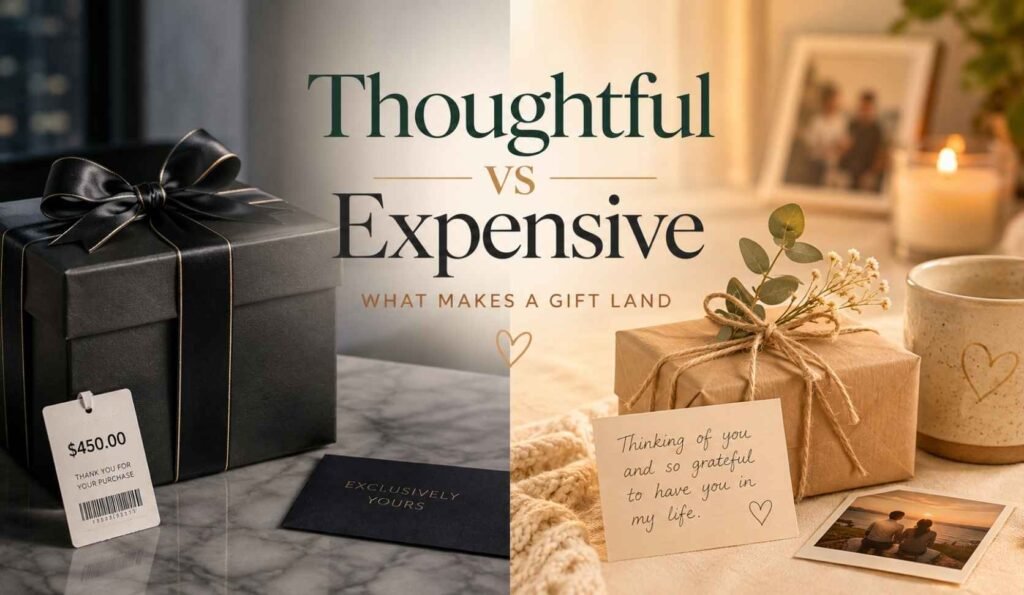
Two rules keep this honest. First, spend up for closeness and weight, not for show. Second, a lower tier with a real personal touch almost always beats a higher tier that is generic. Effort reads as care, and care is the thing people actually remember.

An object lasts on a shelf. An experience lasts in memory. Both can be perfect, and the right choice depends on the person.
Choose an experience (a class, a concert, a dinner, a weekend away, a shared activity) when the recipient values time over things, already owns plenty, or is hard to shop for. Experiences are also the safer bet for someone whose exact taste you do not know, because you are giving a feeling rather than betting on a specific style.
Choose an object when the person is practical, collects or cares deeply about a particular category, or would genuinely use and enjoy the thing every day. A well-chosen object they reach for constantly can be just as sentimental as any outing. When in doubt, ask which one this specific person would talk about a month later.
Personalization is the most repeated tip in every gift guide, and also the most abused. A name slapped on a mass-produced item is not personal. Real personalization ties back to something only you would know.
Aim for the specific over the generic. Not “a photo book,” but the trip you both still laugh about. Not “engraved jewelry,” but the coordinates of a place that matters to the two of you. Not “a custom mug,” but the inside joke that only lands for the recipient. The test is simple: if the personalization would make sense on a gift for anyone, it is not personal yet. If it only makes sense for this one person, you have it right.
Sometimes the framework has to run fast, or you are shopping for someone you have only just met. There are honest fallbacks that never feel like a cop-out.
For a last-minute save, lean on the consumable or the experience. Both look deliberate even when time was short, especially with a genuine note attached.

The five-step framework works for anyone. To make it concrete, use the occasion-specific guides below, each built on the same decide-then-shop approach:
You can also revisit our start-here guide to celebrating every occasion for the bigger picture on planning meaningful celebrations.
Shift from objects to experiences, consumables, or personalization. Someone with plenty of things rarely has too much time, too many memories, or too many items tied to a specific meaning. An outing you share, a high-quality consumable they would not buy for themselves, or an object personalized to your history together sidesteps the “they already own it” problem entirely.
The most thoughtful budget-tier gifts trade money for attention. A well-chosen consumable tied to a taste they love, a handwritten letter, a curated playlist or photo set, or a small item that answers a complaint you have heard them repeat all read as deeply considered. Add a note explaining why you chose it, and the gift feels personal regardless of tier.
No, not when it is chosen with care. A gift card becomes rude only when it looks like zero thought. Pick one for a place the person genuinely loves, present it with a real note, and it respects both their taste and their freedom to choose. That is thoughtful, not lazy.
Enough to match your relationship and the occasion, and never more than you can comfortably afford. Think in tiers (budget, mid-range, premium) rather than a fixed number: closer relationships and higher-stakes occasions lean toward the premium end, casual ones toward budget. A modest gift with a real personal touch beats an expensive generic one.
Reach for a universal fallback: a quality consumable like coffee or chocolate, a well-presented gift card to a popular spot, or a host gift such as a nice bottle or serving piece. These stay warm and appropriate without needing detailed knowledge of the person’s taste, which makes them ideal for new acquaintances.